
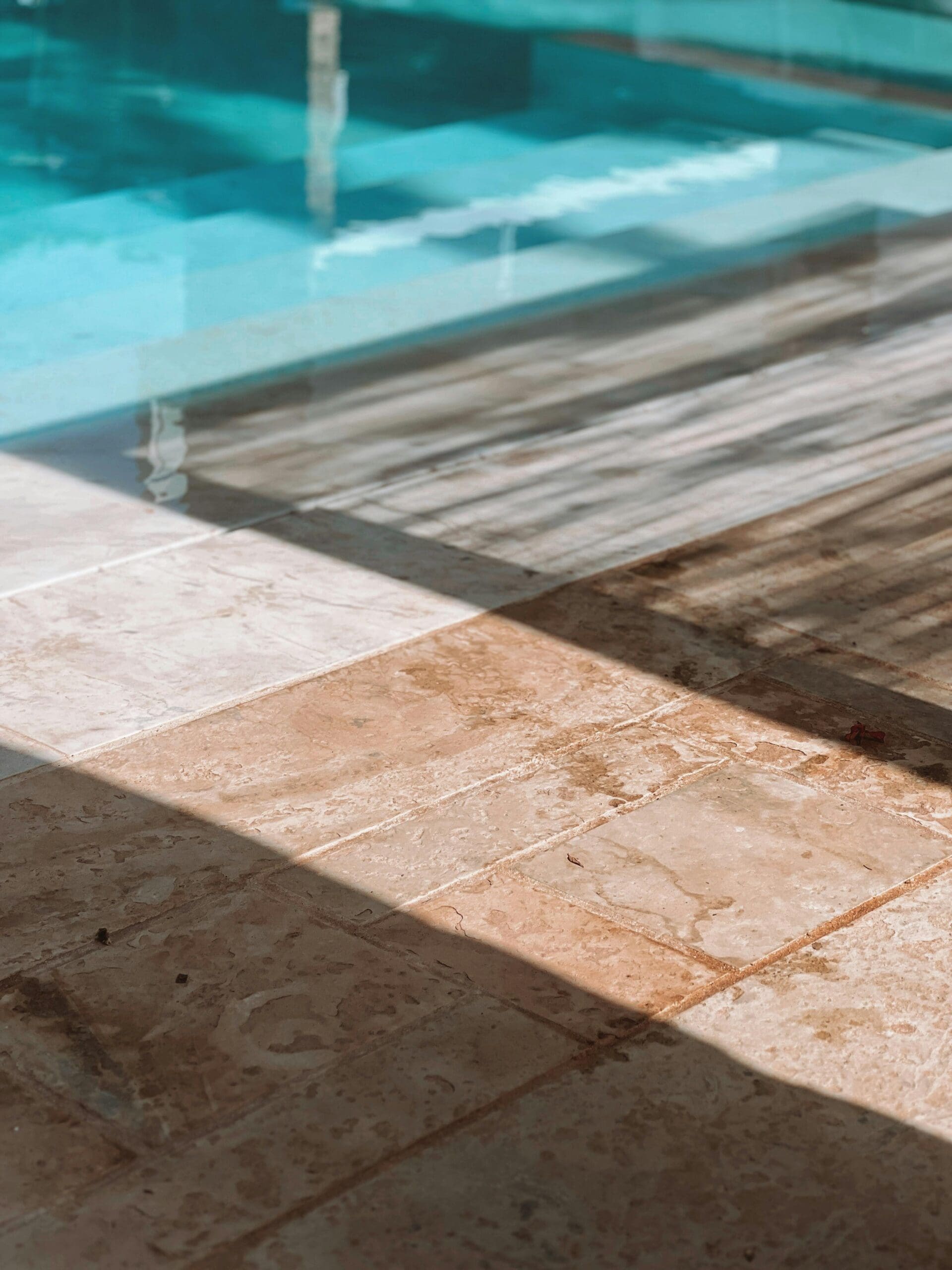
Why Travertine Turns Yellow in Arizona (And How to Restore It)
Travertine is known for its natural, timeless beauty—but if you live in Phoenix or Chandler, AZ, you may notice your travertine taking on a yellow or dull tone over time. This isn’t random—it’s a common issue caused by Arizona’s unique environment.
If you’re asking “why is my travertine turning yellow?”, here’s exactly what’s happening—and how to fix it safely.
Why Travertine Turns Yellow
Travertine is a porous, calcium-based natural stone, which means it absorbs minerals, moisture, and contaminants easily. In Arizona, several factors accelerate discoloration.
1. Hard Water Mineral Buildup (Most Common Cause)
Arizona has some of the hardest water in the country, especially across the Phoenix metro area.
Over time, minerals like calcium and magnesium build up on and inside the stone. While this often appears white at first, it can trap dirt and contaminants—eventually creating a yellow or dingy appearance.
2. Oxidation of Natural Iron in the Stone
Some travertine contains trace amounts of iron. When exposed to moisture and oxygen, that iron can oxidize (similar to rust), leading to yellow, orange, or brown discoloration.
This is especially common in outdoor areas or spaces exposed to water, like showers or pool decks.
3. UV Exposure + Sealant Breakdown
The intense Arizona sun breaks down protective sealers faster than in other climates.
Once the sealer wears off:
- The stone becomes more absorbent
- Dirt and oils penetrate deeper
- Yellowing and uneven coloring become more visible
4. Improper Cleaning Products
Using acidic cleaners (like vinegar or citrus-based products) can chemically react with travertine, altering its surface and color.
This often leads to:
- Etching (dull spots)
- Discoloration
- Uneven, patchy tones
5. Embedded Dirt, Dust, and Oils
Arizona dust is extremely fine and abrasive. Over time, it settles into the pores of travertine, especially in high-traffic areas.
This buildup can cause the stone to appear:
- Yellowed
- Dull
- Uneven in tone
How to Restore Yellowed Travertine
The good news: in most cases, yellowing is treatable and reversible with the right approach.
Step 1: Deep Professional Cleaning
Standard mopping won’t remove embedded minerals or dirt. Professional cleaning uses specialized solutions to break down buildup without damaging the stone.
Step 2: Honing and Polishing (If Needed)
If discoloration is deeper (from etching or oxidation), the surface may need to be mechanically restored through honing and polishing to bring back a uniform finish.
Step 3: Proper Sealing
Once restored, sealing is critical. A high-quality sealer:
- Protects against future staining
- Slows mineral absorption
- Keeps the color consistent longer
Step 4: Maintenance with the Right Products
To prevent yellowing from returning:
- Use only pH-neutral stone cleaners
- Avoid excess water during cleaning
- Clean spills immediately
Why This Happens More in Phoenix & Chandler Homes
Homes in Phoenix and Chandler, AZ face a perfect storm of conditions:
- Hard water deposits from daily use
- Intense UV exposure
- Dust and debris from the desert environment
- Heat that accelerates wear on sealers
Together, these factors make travertine discoloration happen faster and more noticeably than in other parts of the country.
When to Call a Professional
If your travertine has:
- Yellow or orange discoloration
- Dull, uneven patches
- Stubborn buildup that won’t clean off
- Worn or failing sealer
…it’s time for professional restoration.
Trying to fix these issues with household products can make the problem worse.
FAQs: Why Travertine Turns Yellow
Why is my travertine turning yellow?
The most common causes are hard water buildup, oxidation of minerals in the stone, and dirt trapped in porous surfaces.
Can yellow travertine be restored?
Yes. In most cases, professional cleaning, honing, and sealing can restore the original color and finish.
Does hard water cause travertine discoloration?
Yes. Hard water minerals build up over time, leading to dullness, staining, and discoloration.
Will vinegar remove yellow stains from travertine?
No. Vinegar can actually damage travertine and make discoloration worse by causing etching.
How do you prevent travertine from turning yellow?
- Use pH-neutral cleaners
- Seal the stone regularly
- Minimize water exposure
- Clean dust and debris frequently
How often should travertine be sealed in Arizona?
Typically every 1–3 years, depending on traffic and exposure to water and sunlight.
Final Thoughts
Yellowing travertine isn’t just a cosmetic issue—it’s a sign your stone is absorbing minerals, dirt, or moisture. The sooner it’s addressed, the easier it is to restore.
With the right cleaning methods and professional care, your travertine can return to its natural, clean appearance—and stay that way. Contact us today for an estimate.
Written by Alison Claerhout, CEO and professional tile and stone specialist serving the Phoenix suburbs. With years of hands-on experience restoring tile and grout across the East Valley, Alison helps homeowners make informed decisions about their flooring. Learn more about Alison’s expertise.
0 Comments