
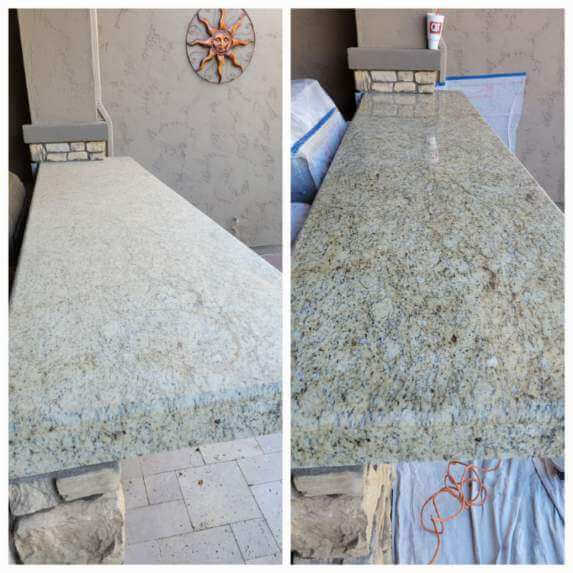
Why Travertine Sealing in Phoenix AZ Is Non-Negotiable
If you have travertine anywhere in your Phoenix home, you already know it looks stunning. What you might not realize is how quickly Arizona’s climate can turn that beauty into a maintenance headache. Travertine sealing in Phoenix AZ isn’t just a nice-to-have, it’s the difference between stone that lasts decades and stone that starts showing damage within months.
Travertine is a porous natural stone. That means it absorbs water, dirt, oils, and anything else that comes into contact with it. In Arizona, that includes hard water minerals, UV radiation, pool chemicals, desert dust, and monsoon moisture. Without a quality sealer, your travertine is constantly under attack from all sides.
Whether your travertine is indoors on your entryway floor or outdoors on your pool deck, sealing creates a protective barrier that extends the life of your stone and keeps it looking clean. You’re not just protecting your investment, you’re reducing the frequency of deep cleaning and restoration work down the line.
What Arizona’s Climate Does to Unsealed Travertine
Phoenix homeowners deal with some of the harshest conditions for natural stone in the country. Intense UV exposure fades and weakens the surface. Hard water from sprinklers and pool splash leaves behind mineral deposits that etch into the stone. Dust and dirt settle into the pores and become nearly impossible to remove without professional help.
Outdoor travertine takes the worst of it. Pool decks in Scottsdale and Paradise Valley are constantly exposed to chlorinated water, which can discolor and degrade unsealed stone over time. Patios in Gilbert and Chandler face relentless sun that dries out the stone and makes it more prone to cracking. Monsoon season brings sudden moisture that can penetrate deep into the pores, leading to efflorescence or that white chalky buildup on outdoor pavers you’ve probably noticed before.
Interior travertine isn’t immune either. Kitchens and bathrooms see spills, foot traffic, and humidity. Without sealing, stains set in fast. Once travertine absorbs a stain, removal becomes a restoration job, not a cleaning task.
How Professional Travertine Sealing Works
Sealing travertine isn’t as simple as wiping on a coat of product and calling it done. Professional travertine cleaning and sealing in Phoenix starts with a thorough assessment of the stone’s condition. If there’s existing damage, staining, or buildup, that gets addressed first. You can’t seal over dirt or deterioration and expect good results.
The stone is deep cleaned to remove all contaminants from the pores. This often involves specialized equipment and pH-neutral cleaners designed for natural stone. Once the surface is completely clean and dry, a penetrating sealer is applied. This type of sealer soaks into the stone rather than sitting on top, which means it protects without changing the natural look or feel of your travertine.
For exterior travertine, an enhancing sealer may be recommended. This deepens the color slightly and adds extra protection against UV damage and moisture intrusion. The goal is always to preserve the stone’s integrity while making it easier for you to maintain.
Interior vs. Exterior Travertine Sealing
Not all travertine gets the same treatment. Interior floors in low-traffic areas may only need a basic penetrating sealer reapplied every few years. High-traffic entryways or kitchens benefit from more durable sealers that resist wear and staining.
Exterior travertine requires a more robust approach. Pool decks, patios, and outdoor steps face constant exposure to the elements. These areas need sealers formulated to handle moisture, temperature swings, and UV radiation without breaking down prematurely.
When to Reseal Your Travertine in Arizona
Sealing isn’t a one-time fix. Arizona’s climate accelerates wear on protective coatings, which means your travertine will need resealing on a regular schedule. How often depends on location, traffic, and exposure.
Indoor travertine typically needs resealing every two to three years. High-traffic areas like entryways or kitchens may need attention sooner. You’ll know it’s time when water no longer beads on the surface or when stains start penetrating faster than they used to.
Outdoor travertine is a different story. Pool decks and patios in Phoenix, Chandler, and Paradise Valley should be resealed annually or every 18 months at most. The combination of UV exposure, hard water, and temperature extremes breaks down sealers faster than you’d expect. If you’re noticing discoloration, rough texture, or increased dirt retention, your sealer has likely worn off.
Professional assessment takes the guesswork out of timing. A trained technician can test your stone’s absorption rate and recommend the right schedule based on your specific conditions.
Why DIY Travertine Sealing Often Falls Short
You can buy sealers at any home improvement store, but that doesn’t mean the results will match what a professional delivers. Travertine sealing requires proper surface prep, the right product for your specific stone and environment, and correct application technique.
Most DIY attempts skip the deep cleaning step or use the wrong cleaner, which leaves residue that prevents the sealer from bonding properly. Store-bought sealers are often topical rather than penetrating, which means they sit on the surface and wear off quickly under Arizona’s conditions. Application errors like over-saturation or uneven coverage lead to blotchy appearance or premature failure.
Professional travertine tile cleaning and sealing ensures the stone is properly prepared and the right product is used for your exact situation. You’re not just paying for the sealer itself, you’re paying for expertise that protects your investment long-term.
Protect Your Travertine Before Arizona’s Summer Hits
Your travertine deserves more than neglect and reactive repairs. Sealing protects it from the daily assault of Arizona’s climate and keeps it looking the way it should. Whether you’re dealing with a pool deck that’s lost its luster or an interior floor that’s starting to show stains, professional sealing restores protection and extends the life of your stone.
If your travertine hasn’t been sealed recently or you’re noticing signs of wear, now is the time to address it. AZ Tile & Grout specializes in travertine restoration and sealing throughout Phoenix, Scottsdale, Gilbert, and the East Valley. We’ll assess your stone, clean it properly, and apply the right sealer to keep it protected year-round. Contact us today to schedule your travertine sealing service and give your stone the protection it needs.
Frequently Asked Questions
1. How much does travertine sealing cost in Phoenix?
Professional travertine sealing in Phoenix typically ranges from $1.50 to $3.50 per square foot, depending on the stone’s condition and location. Outdoor areas like pool decks often cost more due to additional prep work and stronger sealers needed for Arizona’s climate. Getting a free estimate helps you understand exactly what your project requires.
2. Can I seal my travertine myself or should I hire a professional?
While DIY sealing is possible, most homeowners get better results from professional service. Proper surface preparation, choosing the right sealer for Arizona conditions, and correct application technique make a significant difference in how long the protection lasts. Professionals also handle any cleaning or minor repairs before sealing, which DIY approaches often miss.
3. How do I know when my travertine needs resealing?
Test your travertine by placing a few drops of water on the surface. If the water soaks in quickly instead of beading up, your sealer has worn off. You might also notice increased staining, rough texture, or that white chalky residue appearing more frequently, especially on outdoor travertine in Scottsdale or Mesa.
4. What’s the difference between sealing indoor and outdoor travertine in Arizona?
Outdoor travertine requires more durable sealers designed to withstand UV radiation, pool chemicals, and monsoon moisture. Indoor travertine uses lighter penetrating sealers since it faces less extreme conditions. Outdoor areas also need resealing more frequently, usually every 12 to 18 months versus every two to three years for interior stone.
5. Will sealing my travertine change how it looks?
A penetrating sealer won’t change your travertine’s appearance, it protects from within while maintaining the natural look. If you want to deepen the color slightly, an enhancing sealer can be used, especially on outdoor travertine. Your technician will recommend the best option based on your preferences and the stone’s location.
Ready to protect your travertine from Arizona’s harsh climate? Schedule your professional travertine sealing service with AZ Tile & Grout today. We serve Phoenix, Scottsdale, Gilbert, Mesa, and throughout the East Valley with expert stone care that extends the life of your investment.
About the Author: Alison Claerhout is CEO and lead tile and stone specialist at AZ Tile & Grout, serving the Phoenix suburbs with expert travertine restoration and sealing services. Learn more about Alison’s expertise in protecting natural stone from Arizona’s demanding climate.
0 Comments