
Why Spring Is the Right Time to Prepare Your Patio for Arizona Summer
Before Phoenix and Mesa hit triple digits, your outdoor pavers are already taking a beating. Desert dust settles into joints, UV rays fade color, and monsoon rains leave behind mineral deposits that bake into the surface once summer arrives. If you wait until June to prepare your patio for Arizona summer, you’re already behind.
Spring is your window. Temperatures are manageable, surfaces are easier to work with, and you have time to address damage before the extreme heat locks it in. Whether you’re dealing with faded pavers, white chalky buildup from hard water, or joints that need attention, now is when you take action.
This guide walks you through the exact steps to clean, inspect, and seal your pavers so they’re ready to handle 115-degree days without cracking, fading, or staining further. You’ll also learn when DIY is enough and when professional paver sealing in Mesa or Phoenix makes more sense for long-term protection.
Step 1: Deep Clean Your Pavers Before the Heat Arrives
You can’t seal dirty pavers. Any dust, oil, or organic buildup left on the surface will trap moisture and prevent sealant from bonding properly. In Arizona, that means your pavers won’t be protected when summer UV and heat stress the surface.
Start with a thorough sweep to remove loose debris. Then use a stiff-bristle brush and a pH-neutral cleaner designed for pavers. Avoid acidic cleaners unless you’re targeting specific stains, they can etch certain stone types and weaken the surface over time.
For oil stains near the grill or driveway, a degreaser formulated for masonry works better than dish soap. Let it sit for 10 to 15 minutes, scrub with a brush, and rinse thoroughly. If stains persist or you’re dealing with deep-set discoloration, professional paver cleaning uses equipment that extracts embedded grime without damaging the surface.
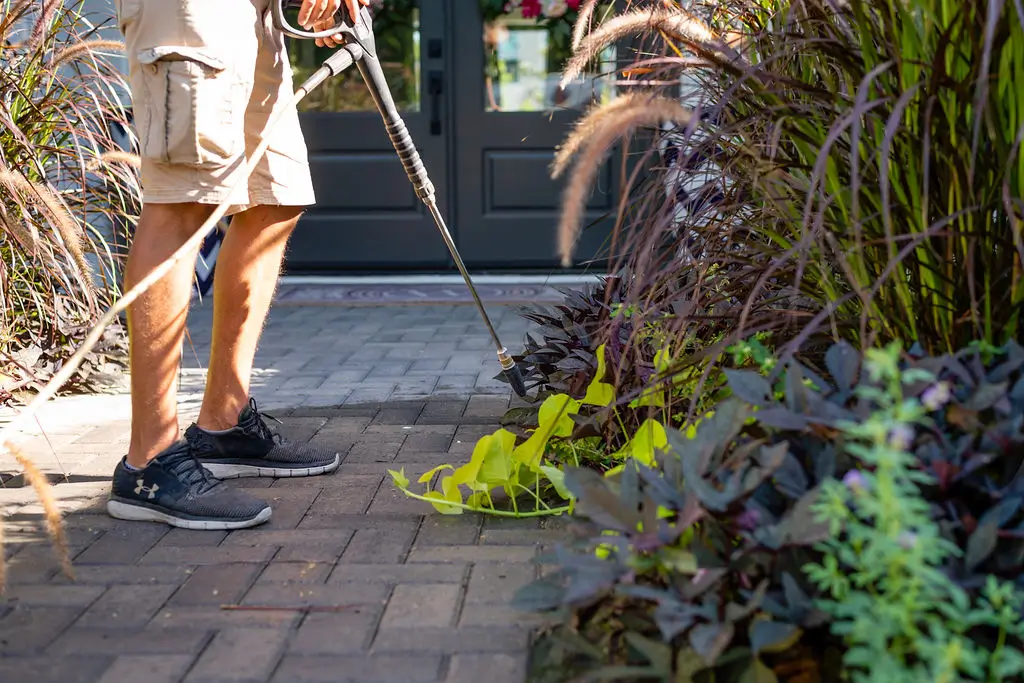
Pressure washing is tempting, but it’s risky. Too much pressure can erode joint sand, pit softer pavers, and create uneven surfaces that trap water. If you do use a pressure washer, keep it under 1,500 PSI and use a wide fan tip. Better yet, let a professional handle it if your pavers are older or made from travertine or softer stone.
Step 2: Inspect for Damage and Address It Now
Once your pavers are clean and dry, walk the entire patio and look for cracks, loose pavers, sunken areas, or eroded joints. Arizona’s soil shifts with temperature swings, and monsoon rains can wash out base material if drainage isn’t right. Small issues now become bigger problems once summer heat expands and contracts the surface daily.
Check for:
- Cracks wider than a quarter inch
- Pavers that rock or shift when stepped on
- Joints with missing or severely eroded sand
- Areas where water pools after rain
- Fading or discoloration that suggests the sealant has worn off
If you find structural issues like sunken sections or widespread cracking, those need to be repaired before sealing. Applying sealant over compromised pavers won’t fix the underlying problem, it just hides it temporarily. For cosmetic wear like fading or minor surface staining, cleaning and sealing can restore much of the original appearance.
When to Call a Professional Before Sealing
If your pavers have significant damage, deep staining, or you’re unsure whether the surface is ready for sealant, a professional assessment saves you time and money. Sealing over the wrong surface or using the wrong product for Arizona’s climate can lead to peeling, hazing, or trapped moisture that accelerates deterioration.
Step 3: Seal Your Pavers to Lock in Protection
Sealing is what separates pavers that fade and crack from pavers that hold up season after season. In Arizona, a quality sealant does more than enhance color. It blocks UV rays, repels water and oil, prevents efflorescence, and makes future cleaning easier. Without it, your pavers absorb everything the desert throws at them.
Choose a sealant designed for Arizona’s climate. Water-based sealers offer a natural look and breathe better in high heat, while solvent-based options provide deeper color enhancement and stronger protection. Both work, but the right choice depends on your paver type, desired finish, and how much traffic the area gets.
Apply sealant only when temperatures are between 50 and 90 degrees, and when no rain is forecasted for at least 24 hours. Spring gives you that window. Summer doesn’t. The surface must be completely dry before application, moisture trapped under sealant leads to clouding and adhesion failure.
Use a low-pressure sprayer or roller for even coverage, and work in small sections to avoid lap marks. Two thin coats perform better than one heavy coat. If you’re sealing travertine or natural stone pavers, test a small area first to ensure the finish matches your expectations.
For homeowners in Phoenix or Mesa managing large patios, pool decks, or high-traffic outdoor spaces, professional paver sealing ensures proper product selection, surface prep, and application technique. It also comes with a warranty that DIY efforts can’t match.
Keep Your Patio Summer-Ready All Season
Once your pavers are sealed, maintenance becomes simple. Sweep regularly to prevent dust buildup, rinse spills quickly before they set, and avoid harsh chemicals that can break down the sealant. Reapply sealant every two to three years depending on sun exposure and foot traffic, or sooner if you notice water no longer beads on the surface.
Taking the time now to prepare your patio for Arizona summer means fewer repairs, better curb appeal, and outdoor spaces you’ll actually want to use once the heat arrives. Your pavers are an investment, treat them like one.
If your patio needs more than a DIY refresh, or if you want the peace of mind that comes with professional-grade cleaning and sealing, AZ Tile & Grout is here to help. We serve homeowners throughout Phoenix, Mesa, and the East Valley with expert paver care built for Arizona’s toughest conditions. Contact us today to schedule your pre-summer paver package and get your outdoor space ready the right way.
Frequently Asked Questions
1. How much does it cost to seal a patio in Mesa or Phoenix?
Professional paver sealing typically ranges from $1.50 to $3.00 per square foot depending on the condition of your pavers, the type of sealant used, and whether repairs are needed first. A standard 500-square-foot patio usually costs between $750 and $1,500. Getting a free estimate before summer helps you budget and ensures your pavers are protected before the extreme heat sets in.
2. Can I seal pavers myself or should I hire a professional?
You can seal pavers yourself if the surface is in good condition, you have the right tools, and you’re confident selecting the correct sealant for Arizona’s climate. However, professional sealing ensures proper surface prep, even application, and long-lasting results with a warranty. If your pavers have stains, damage, or it’s been years since the last seal, hiring a pro saves time and prevents costly mistakes.
3. What happens if I don’t seal my pavers before Arizona summer?
Unsealed pavers absorb UV rays, water, oils, and dirt, which leads to fading, staining, cracking, and efflorescence. Once summer heat arrives, damage accelerates and becomes harder to reverse. Sealing now protects your investment and keeps your patio looking good through monsoon season and triple-digit temperatures.
4. How do I find paver sealing services near me in the East Valley?
Look for local companies that specialize in paver care and have experience working in Arizona’s climate. Check reviews, ask about the sealants they use, and confirm they offer free estimates. AZ Tile & Grout serves Mesa, Gilbert, Scottsdale, Phoenix, Tempe, and surrounding East Valley communities with professional paver cleaning and sealing designed for desert conditions.
5. How long does paver sealant last in Arizona?
In Arizona’s intense sun and heat, quality sealant typically lasts two to three years before it needs reapplication. High-traffic areas or pavers in full sun may need resealing sooner. You’ll know it’s time when water stops beading on the surface or the color starts to fade again.
Ready to protect your patio before the heat hits? AZ Tile & Grout offers professional paver sealing in Phoenix and Mesa with expert surface prep, premium sealants, and results that last. Schedule your free estimate today and get your outdoor space summer-ready the right way.
About the Author: Alison Claerhout is the CEO of AZ Tile & Grout and a professional tile and stone specialist serving the Phoenix suburbs. With years of hands-on experience in desert paver care, she helps homeowners protect and restore their outdoor surfaces. Learn more about Alison.
0 Comments