
What Actually Happens When a Professional Cleans Your Tile Floors
You’ve scrubbed your grout lines on your hands and knees. You’ve tried every store-bought cleaner. The tile still looks dull, and the grout is still stained. If you’re wondering how tile floors are professionally cleaned and what makes it different from what you’ve been doing, you’re not alone. Most homeowners across Mesa and the East Valley are surprised to learn just how much dirt, bacteria, and buildup hides in their tile and grout, even after regular mopping.
Professional tile cleaning isn’t just about stronger products. It’s about the right equipment, the right process, and knowing what your specific flooring needs. Here’s exactly what happens during a professional service visit, step by step.
Step 1: Pre-Inspection and Floor Assessment
Before any cleaning begins, a trained technician walks through your home and evaluates your tile and grout. This isn’t a formality. It’s a critical part of the professional tile cleaning process.
During the inspection, the technician identifies your tile type, whether it’s ceramic, porcelain, natural stone like travertine, or something else. Each material responds differently to cleaning methods. They also check grout condition, looking for cracks, discoloration, or areas where sealer has worn away. In Arizona homes, hard water staining and desert dust accumulation are common issues that get flagged during this stage.
The technician will also ask about problem areas. Maybe your kitchen has heavy foot traffic. Maybe your entryway collects more dirt because of the sandy soil outside. These details shape the approach and ensure nothing gets missed.
Step 2: Dry Soil and Debris Removal
Once the assessment is complete, the first cleaning step is removing loose dirt and debris. This might seem basic, but it’s essential. If you skip this step and go straight to wet cleaning, you’re just pushing dirt around and creating muddy residue.
Professionals use commercial-grade vacuums or dust mops designed for hard surfaces. These tools pick up fine particles that household vacuums often miss, especially the dust that settles deep into grout lines. In the East Valley, where dust storms and year-round dryness are part of life, this step removes more than you’d expect.
Step 3: Pre-Treatment Application
After dry debris is cleared, the technician applies a pre-treatment solution to the tile and grout. This is where the professional tile cleaning steps start to differ significantly from DIY methods.
The pre-treatment is a pH-balanced cleaner formulated to break down oils, soap scum, food residue, and embedded grime. It’s applied evenly across the floor and given time to penetrate the grout. Grout is porous, which means it absorbs dirt over time. A quality pre-treatment loosens that buildup so it can be extracted, not just smeared around.
For homes dealing with hard water stains common in Arizona, technicians may use specialized treatments that target mineral deposits without damaging the tile surface. This is especially important for natural stone, which can etch or dull if the wrong product is used.
Step 4: High-Pressure Steam Cleaning and Extraction
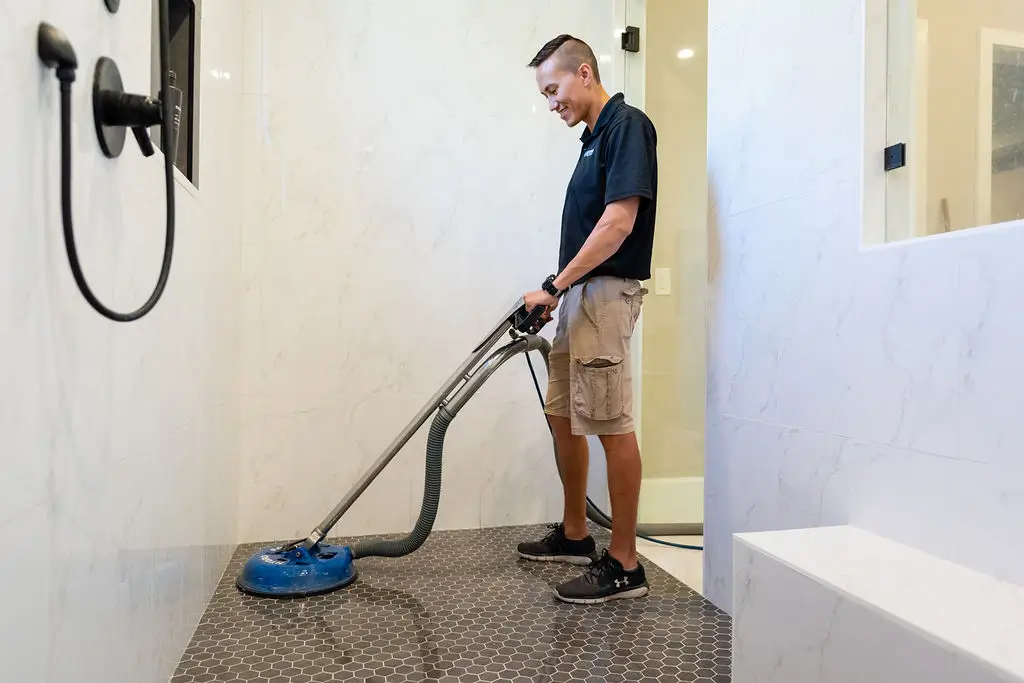
This is the core of how tile floors are professionally cleaned. After the pre-treatment has done its job, the technician uses a high-pressure steam cleaning system, often paired with rotary scrubbing tools.
The machine injects hot water and cleaning solution deep into the grout lines under controlled pressure, then immediately extracts the dirty water along with all the loosened grime. The heat helps sanitize the surface, killing bacteria and mold spores that thrive in damp grout. The extraction prevents dirty water from being reabsorbed, which is a common problem when mopping.
For homeowners in Mesa or Gilbert who’ve tried DIY grout cleaning methods, this step reveals the real difference. Professional equipment reaches temperatures and pressures that consumer-grade tools simply can’t match.
Step 5: Detail Work and Grout Line Scrubbing
Even with powerful extraction equipment, some areas need hands-on attention. Corners, edges, and heavily stained grout lines often require manual scrubbing with specialized brushes and tools.
Technicians use stiff-bristled brushes designed for grout without damaging surrounding tile. They focus on high-traffic zones like entryways and kitchens, where grime tends to settle deepest. In Arizona homes with tile-heavy layouts, this detail work can make a dramatic visual difference, especially in open floor plans where grout lines run the length of the room.
This step also addresses any spots missed during the initial pass. Professional tile and grout cleaning in Mesa and across the East Valley isn’t a one-size-fits-all process. Every home has unique wear patterns, and experienced technicians adjust their approach accordingly.
Step 6: Neutralizing Rinse and Final Extraction
After scrubbing and steam cleaning, a neutralizing rinse is applied to remove any remaining cleaning solution. This step is critical for preventing residue buildup, which can attract dirt faster and leave floors feeling sticky or dull.
The rinse is extracted using the same high-powered equipment, leaving your tile and grout as clean and dry as possible. Proper extraction also speeds up drying time, which matters in Arizona’s low-humidity climate. Most professionally cleaned tile floors are dry and ready for light foot traffic within a few hours.
Step 7: Optional Sealing for Long-Term Protection
Once your tile and grout are clean and dry, sealing is often recommended, especially if your grout hasn’t been sealed in years or if you have natural stone tile. Sealer creates a protective barrier that resists stains, moisture, and dirt infiltration.
For grout, a penetrating sealer soaks into the porous surface and hardens, making it much easier to maintain between professional cleanings. For travertine or other natural stone, sealing protects against etching and staining from spills or acidic cleaners. If you’re dealing with discolored grout that won’t come clean, grout color sealing can restore a uniform appearance without the cost of regrouting.
Sealing isn’t always included in a basic cleaning service, but it’s a smart investment that extends the life of your floors and keeps them looking better longer.
When Professional Cleaning Makes the Most Sense
Understanding how tile floors are professionally cleaned helps you see why DIY methods often fall short. You’re not just paying for labor. You’re paying for equipment that sanitizes, extracts, and restores in ways that household tools can’t replicate.
If your grout is discolored, your tile looks hazy despite regular cleaning, or you’re preparing to sell your home, professional cleaning delivers results that make a real difference. For East Valley homeowners who value their investment and want floors that look as good as the day they were installed, it’s not an expense, it’s maintenance that pays off.
Ready to see what professional tile and grout cleaning can do for your home? Schedule your service visit and experience the difference that comes from working with local specialists who understand Arizona homes inside and out.
Frequently Asked Questions
1. How is professional tile cleaning different from mopping?
Professional cleaning uses high-pressure steam extraction to pull dirt and bacteria out of grout pores, while mopping just pushes dirty water around the surface. The heat sanitizes, and the extraction prevents reabsorption. You’re left with genuinely clean floors, not just rinsed ones.
2. How long does it take to professionally clean tile floors in a typical home?
Most tile cleaning jobs take between two to four hours depending on square footage and grout condition. Heavily soiled areas or homes with natural stone may take longer. Your floors are usually dry enough for light foot traffic within a few hours after the service.
3. Do I need to seal my grout after professional cleaning in Mesa?
Sealing is highly recommended, especially in Arizona where dust and hard water are constant challenges. Clean grout absorbs sealer better, and the protection helps your floors stay cleaner longer. If your grout hasn’t been sealed in years, now is the ideal time.
4. Can professional cleaning remove years of built-up stains from grout?
Most stains can be significantly lightened or removed with professional equipment and pre-treatment. If grout is permanently discolored, color sealing can restore a uniform look without replacing the grout. Your technician will assess what’s possible during the inspection.
5. Where can I find tile and grout cleaning near me in the East Valley?
Look for local specialists who understand Arizona flooring challenges like hard water and desert dust. A company with experience in Mesa, Gilbert, Scottsdale, and surrounding areas will know how to handle the unique conditions that affect tile and grout in our climate.
If your tile and grout need more than a mop can deliver, it’s time to bring in the professionals. Get a free estimate from AZ Tile & Grout and see how clean your floors can really be. We serve Mesa, Gilbert, Scottsdale, and the entire East Valley with proven results you can see and feel.
Written by Alison Claehout, CEO and professional tile & stone specialist serving the Phoenix suburbs for over a decade. Learn more about Alison’s expertise.
0 Comments